


Today’s key habit for maintaining client relationships: Master Communication.
Ensure you build strong communication habits with your clients. Is your communication, efficient, valuable, and thorough?
1. Set Expectations Upfront
Expectations for yourself:
At the beginning of your relationship, in writing and in conversation, clearly lay out what you plan to do and your criteria for successfully delivering your service or product.
Provide a general timeline of your process. Ensure they feel comfortable with your success criteria and the timetable you set.
Expectations for them:
At Superpowers, we require a six-month commitment. We want to ensure our clients understand that progress takes time. They need to invest their time to see valuable returns.
Lay out anything they need to deliver: What deadlines do they need to meet? Do they need to do anything specific to ensure your efforts are successful?
This mutual accountability sets the scene early and leads to mutual respect and optimal results.
Expectations for what’s possible:
As the expert in the relationship, it is important to listen to their needs and accommodate as much as possible, but you must also be honest when their expectations are unrealistic.
Unrealistic deadline? Expecting results your service/product does not provide? Be upfront about this.
Your client will respond better to a”no” upfront than a “yes” that cannot be delivered upon. If they do not receive this corrective explanation well, they may not be a match for you, and you have saved yourself time by having this discussion upfront.
2. Communicate Intentionally
Do you make it abundantly clear how you plan to communicate with your clients?
First, Establish a schedule for consistent communication. Consistent touchpoints are essential to remaining aware of your client’s needs as they shift over time.
We champion the value of client check-ins. We have check-ins around the first 30, 60, and 90 days of a client’s contract. These check-ins provide 3 benefits:
1. They provide a space specifically designed for the entrepreneur to give adjusting feedback
2. They allow for continued idea exchange with the client
3. They help minimize the blind spots in our and the client’s approaches
Also, ensure open lines of communication. Does your client know how they can get ahold of you? Do they know when you are available to reply or pick up the phone?
Provide phone numbers, emails, and any other lines of communication, along with times you are able to respond.
Consider: How do they get ahold of you for routine questions? How about emergencies?
In your company, you may need to set an internal protocol for what is appropriate for different clients.
Finally, give them consistent updates. Discuss with your clients how often, or at what stages, you will be providing updates. Then follow through. Your client will deeply appreciate knowing how things are progressing and seeing the concrete returns on their investment.
3. Respect their time
Make sure every interaction with them is intentional, deliberate, and valuable.
Your client is paying you to give them some advantage in their time and efficiency. You don’t want to detract from that advantage through inefficient interactions that drain their time and produce insufficient value.
Are you sending them an email? Before you send them that email, does it provide valuable information or discuss a necessary action step they must take? Is the messaging clear and easy to read quickly?
Are you having a meeting? Prepare an agenda, know what you need to discuss and what questions they may have. Ensure you have all the supporting materials readily available before you start.
Avoid being a roadblock to their schedule. Build a system to flag time-sensitive messages from your clients, so you can reply promptly.
As a busy entrepreneur yourself, it can be difficult to track every message coming into your inbox. Fortunately, an Executive Assistant can streamline the process for you.
While you focus on your work, they can keep a watchful eye out for important messages and promptly notify you as they come in.
4. Deliver and Overdeliver
Business owners often overcomplicate entrepreneurship – the simple secret to success is delivering on your promises.
On a recent The Next Level Show podcast, the successful entrepreneur KC Kronbach said it best: “Do what you say you’re going to do, do it well, follow through…and, as long as your business concept is viable, it’ll work.”
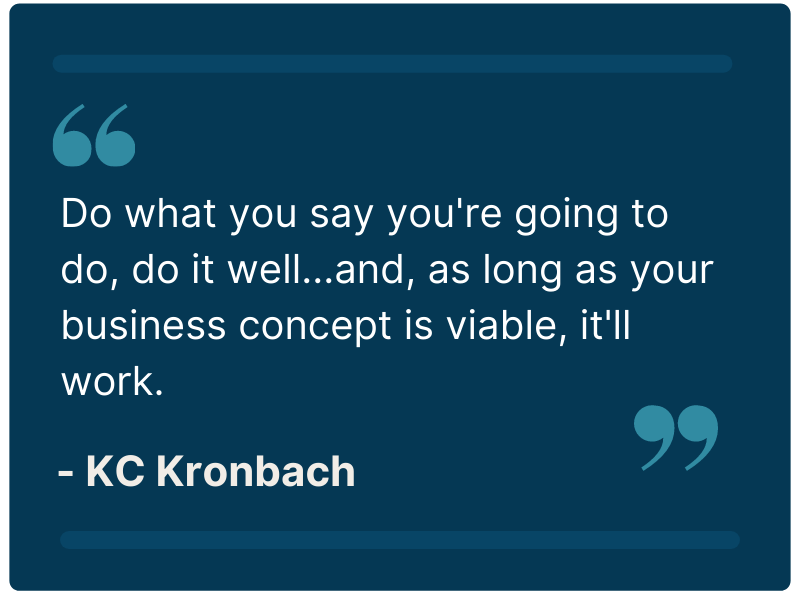
From the onset of your relationship, you communicate clear expectations for the relationship. What is your promised outcome? What key actions will you be performing to reach that outcome. Follow through and exceed the expectations you set.

Ensure your clients experience across-the-board excellence from you. Not just in the service or products you provide.
Maintain polished, authoritative branding. Ensure your communications, platforms, and content are clean, cohesive, and professional. Your visuals and language can make or break your client’s impression of you.
Conclusion
Maintaining client relationships requires masterful communication, so consider your approach to communication. Is it clear, efficient, and valuable?
Have any other strategies you would find useful? Feel free to share them below! Check out our other tips on maintaining client relationships on the Superpowers Blog
Interested in starting your journey with an Executive Assistant? We’re happy to discuss the process with you! Book a discovery call today!